
What if your business’s first major setback occurs before you even issue your first invoice? Many entrepreneurs spend weeks crafting their favourite brand identity, only to find their application rejected by the CIPC due to a naming conflict or a failure to meet statutory standards. It’s a frustrating hurdle that can stall your momentum and create unnecessary administrative costs. When choosing a name for your company in South Africa, you must manage the intersection of creative branding, legal compliance under the Companies Act, and digital availability.
This 2026 guide ensures you master the legal and strategic requirements for selecting a CIPC-compliant business name that builds a lasting brand. You’ll learn how to secure a unique identity that passes regulatory scrutiny without sacrificing your market appeal. We will clarify the confusion between trading names and registered names, explain the mandatory use of suffixes like (Pty) Ltd, and provide a clear path to registration, including how shelf companies can bypass naming delays. Follow these structured steps to move from a conceptual idea to a legally secured entity with confidence and precision.
Key Takeaways
- Understand the mandatory legal requirements, including the use of the (Pty) Ltd suffix, to ensure your entity complies with the Companies Act.
- Master the strategic balance between descriptive and evocative branding when choosing a name for your company in South Africa.
- Prepare a prioritised shortlist of four unique names to streamline the CIPC reservation process and minimise the risk of rejection.
- Recognise common naming pitfalls, such as using protected words or existing trademarks, to avoid unnecessary administrative delays.
- Explore the benefits of acquiring a shelf company for immediate trading if you cannot wait for a new name reservation to be processed.
Understanding the Legal Requirements for South African Company Names
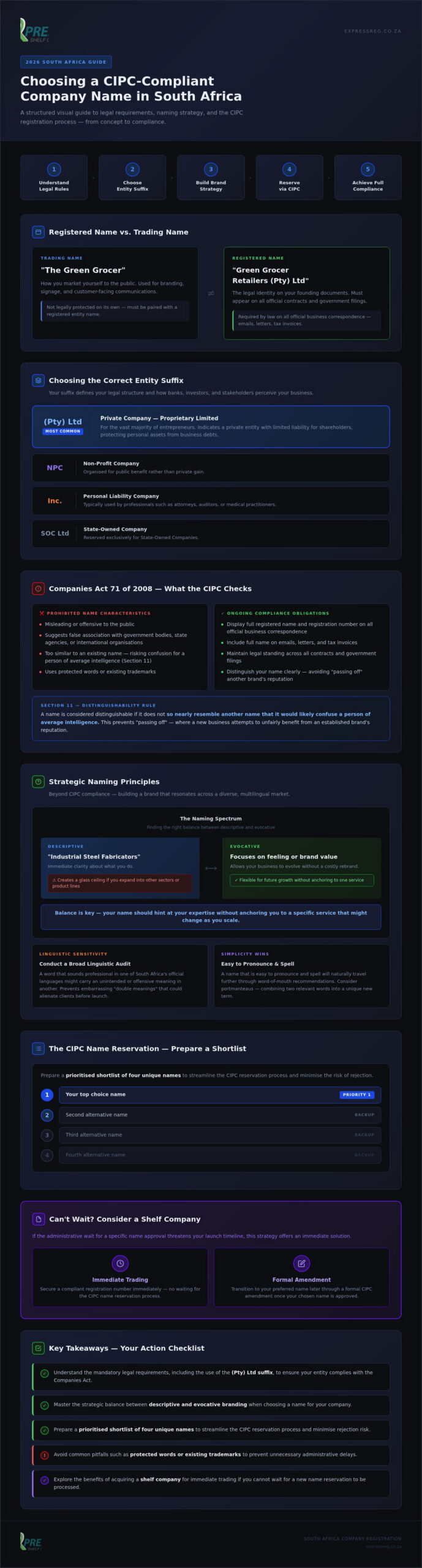
The Companies and Intellectual Property Commission (CIPC) serves as the primary regulatory gatekeeper for all corporate identities in the country. When you are choosing a name for your company in South Africa, the commission doesn’t merely check for exact duplicates. It evaluates your proposal against strict statutory criteria to prevent public confusion and ensure transparency. It’s vital to distinguish between your registered name, which is the legal identity on your founding documents, and a “trading as” name. Whilst you might market yourself as “The Green Grocer”, your legal entity must be registered as something specific, like “Green Grocer Retailers (Pty) Ltd”. This formal name must appear on all official contracts and government filings to maintain legal standing.
The Companies Act 71 of 2008 Framework
The Companies Act provides the legal boundaries for what is permissible in a corporate name. It prohibits names that are misleading, offensive, or suggest a false association with government bodies, state agencies, or international organisations. Compliance is not just about the registration phase; you’re also required by law to display your full registered name and registration number on all official business correspondence, including emails, letters, and tax invoices. Under Section 11, a name is considered distinguishable if it does not so nearly resemble another name that it would likely confuse a person of average intelligence. This rule is designed to prevent “passing off”, where a new business attempts to unfairly benefit from the reputation or market presence of an established brand.
Choosing the Correct Entity Suffix
Your choice of suffix defines your legal structure and significantly influences how stakeholders, banks, and investors perceive your business. For the vast majority of entrepreneurs, a private company requires the (Pty) Ltd suffix, which stands for “Proprietary Limited”. This indicates that the company is a private entity with limited liability for its shareholders, protecting personal assets from business debts. Other common suffixes serve specific purposes:
- NPC: Required for Non-Profit Companies that are organised for public benefit rather than private gain.
- Inc: Used for Personal Liability Companies, typically by professionals such as attorneys, auditors, or medical practitioners.
- SOC Ltd: Reserved for State-Owned Companies.
When choosing a name for your company in South Africa, correctly identifying your entity type ensures that your brand carries the appropriate level of professional weight amongst your peers. If the administrative wait for a specific name approval threatens your launch timeline, many founders choose to purchase a shelf company south africa. This strategy allows you to secure a compliant registration number immediately and transition to your preferred name through a formal amendment once the CIPC processes the request.
Strategic Principles for a Lasting Business Brand
Choosing a name for your company in South Africa involves more than just satisfying the CIPC. You must develop an identity that resonates across a diverse, multilingual market whilst remaining flexible enough for future growth. A purely descriptive name, such as “Industrial Steel Fabricators”, provides immediate clarity but creates a glass ceiling if you decide to expand into other product lines or sectors. Conversely, an evocative name focuses on the feeling or value of your brand, allowing your business to evolve without the need for a costly rebrand later. Balance is key; your name should hint at your expertise without anchoring you to a specific service that might change as you scale.
Linguistic sensitivity is paramount in the local context. A word that sounds professional in one of South Africa’s official languages might carry an unintended or even offensive meaning in another. Conduct a broad linguistic audit to ensure your chosen name maintains its integrity amongst different cultural groups. This step prevents the embarrassment of a “double meaning” that could alienate potential clients before you’ve even launched. When choosing a name for your company in South Africa, simplicity often wins. A name that is easy to pronounce and spell will naturally travel further through word-of-mouth recommendations.
Creative Brainstorming Techniques
Effective brainstorming often starts with word association or the creation of portmanteaus, which combine two relevant words into a unique new term. This approach helps you avoid the generic cliches that saturate many industries, such as “Global”, “Solutions”, or “Apex”. These terms are often so overused that they fail to register with consumers. Use the “Radio Test” to evaluate your shortlist. If you say the name over the phone, can the listener spell it correctly on their first attempt? If your name requires constant spelling corrections, it will hinder your marketing efforts and digital searchability.
Digital and Trademark Alignment
Your CIPC reservation is only one part of your brand’s legal and digital footprint. It’s essential to check .co.za domain availability and social media handles before you finalise your application. A common mistake is assuming that a CIPC-approved name is automatically protected as a trademark. In reality, name reservation only prevents others from registering the exact same company name. It doesn’t grant you the exclusive right to use that name for specific goods and services. If you need help managing these moving parts, you can register your company through a facilitator to ensure every administrative box is ticked correctly. Always perform a preliminary search on the trademark register to ensure you aren’t infringing on an existing brand, as this could lead to expensive legal disputes and a forced name change down the line.
The CIPC Name Reservation Process: A Step-by-Step Guide
The administrative phase begins once you’ve finalised your creative shortlist. When choosing a name for your company in South Africa, the CIPC requires you to submit up to four options in order of preference. This multi-name strategy is essential because the commission’s systems check names sequentially. If your first choice is too similar to an existing entity, the examiner moves to your second option without requiring a new application or additional fees. This approach saves significant time and prevents the frustration of repeated single-name rejections.
You can manage this process through the CIPC e-services portal or by appointing an expert facilitator to handle the statutory filings on your behalf. Whilst the digital portal is open to the public, the technical requirements for document uploads and tracking can be cumbersome for first-time users. Enlisting professional assistance ensures that your application is formatted correctly from the outset, reducing the likelihood of administrative queries that could stall your registration. Once your application is submitted, you’ll receive a tracking number to monitor the progress of your reservation through the various stages of departmental review.
Submitting Your Application
The CIPC requires multiple name options to ensure that at least one viable identity is secured in a single transaction. Standard processing times for name reservations typically range from one to three business days, though this depends on the commission’s current workload. Your application status will update to “Approved” once a name meets all statutory criteria. If your status shows “Rejected”, the commission provide a reason code, such as “Comparative Name Conflict”. This indicates that your proposal is too similar to a registered trademark or an existing company name, necessitating a fresh submission with more distinct alternatives.
Managing Your Approved Reservation
An approved reservation is a critical milestone, but it’s only a temporary hold on the name. You have a specific window, usually six months, to register pty ltd south africa before the reservation expires. If your business planning is delayed, you can apply for an extension to protect your chosen identity for an additional period. Don’t start trading, print signage, or sign commercial leases until the full incorporation is finalised. Trading under a reserved name that hasn’t been formally registered as a company creates significant legal risks and could lead to personal liability for the founders. Treat the reservation as the foundation for your final registration, ensuring all director details and share structures are ready for the final submission.
Avoiding Common CIPC Rejections and Pitfalls
The CIPC maintains a high standard for name approvals to protect the integrity of the national business register. Many entrepreneurs face avoidable delays because they underestimate the commission’s strictness regarding distinctiveness. When choosing a name for your company in South Africa, you must steer clear of terms that imply a false endorsement or use language that the state deems unsuitable for a corporate identity. Rejections aren’t just an inconvenience; they require fresh applications and additional administrative fees, which can stall your business launch by several weeks.
Statutory compliance requires that your name does not incite violence or promote hate speech. Beyond these obvious restrictions, the CIPC also flags names that are blasphemous or racially insensitive. Even if you believe a term is “edgy” or “modern”, the commission prioritises public interest and social harmony. If your proposal is deemed offensive, it will be rejected outright without an opportunity for appeal. It’s always safer to choose a name that projects professional stability and respects the cultural diversity of the South African market.
Restricted Words and Phrases
Certain words are legally protected and require special permission from regulatory bodies before they can be used in a company name. Terms like “Bank”, “Insurance”, “Trust”, and “National” are heavily regulated under specific financial and state acts. Using “South Africa” or “SA” at the very beginning of your name is also a common pitfall, as it often suggests a national or state-affiliated status that most private firms don’t possess. Purely descriptive names like “The Bread Shop” are often rejected because they fail to provide a unique identifier that distinguishes the business from every other bakery in the country. To avoid these hurdles, you can register your company through our streamlined service to ensure your name meets all statutory criteria.
The “Too Similar” Rule
The CIPC uses an automated system to flag phonetic similarities and plural variations that could confuse the public. For example, if “Green Gardens (Pty) Ltd” already exists, an application for “Greene Garden (Pty) Ltd” will likely be rejected. This rule prevents “passing off”, where a new business attempts to trade on the established reputation of another firm. If you’re taking over an existing entity and need to update its identity, you might need to process a director change CIPC filing alongside your name amendment to ensure the new board is correctly reflected on the updated registration documents. Always aim for a name that is visually and phonetically distinct to ensure a smooth approval process.
From Name Selection to Full Compliance
Securing your name is a significant milestone, but it doesn’t grant you the right to trade until the full registration process is complete. After receiving your approval notice, you must submit your Memorandum of Incorporation (MOI) and director details to the CIPC. This final step transforms your reserved name into a legal entity with its own registration number. Whilst choosing a name for your company in South Africa requires creative and legal diligence, the subsequent incorporation phase demands strict attention to administrative detail to ensure your firm is recognised by SARS and other regulatory bodies.
New Registration vs Shelf Companies
If your business requires an immediate registration number for a contract or tender, waiting for a custom name approval might not be feasible. In these instances, purchasing a shelf company south africa provides a strategic advantage. These entities are already registered with the CIPC and have issued registration numbers, allowing you to start trading almost instantly. Once you take ownership, you can initiate a name change to your preferred brand identity. Express Shelf Company manages this transition by handling the name amendment and director updates, ensuring the entity reflects your specific brand whilst bypassing the initial waiting period.
Your Post-Naming Compliance Checklist
Compliance extends beyond the initial registration. Once you receive your COR14.3 registration certificate, your company is usually automatically registered for income tax. You must verify your tax status with SARS to obtain your official tax number, which is often issued within 24 to 48 hours of successful CIPC registration. Use your new documents to open a business bank account, as trading through personal accounts can complicate your tax filings and financial transparency. You must also address labour requirements by registering for COIDA and UIF if you plan to employ staff.
Long-term standing depends on your ability to meet recurring statutory obligations. When choosing a name for your company in South Africa, you are building a foundation that requires ongoing maintenance. Set a reminder for your CIPC annual returns submission, which is due every year during the anniversary month of your incorporation. Failure to file these returns can lead to the deregistration of your company, resulting in the loss of your hard-earned name. Additionally, ensure you file your beneficial ownership details as required by recent legislative updates to maintain full transparency with the commission.
Secure Your Corporate Identity with Confidence
Choosing a name for your company in South Africa is the foundational step in your entrepreneurial journey. It requires a strategic blend of creative brand building and strict adherence to the Companies Act. By understanding the CIPC requirements for distinctiveness and avoiding restricted terminology, you protect your business from administrative delays and legal challenges. Securing your (Pty) Ltd suffix and ensuring your name passes linguistic checks sets the stage for a professional market presence that resonates with stakeholders and customers alike.
Once your identity is secured, the focus shifts to full statutory compliance and tax registration. We provide expert CIPC filing services and comprehensive support to ensure your transition to full legal standing is seamless. If you don’t want to wait for the initial name approval, our fast turnaround on shelf company transfers provides an immediate solution. Register your new Pty Ltd or secure a shelf company today with Express Shelf Company to handle the heavy lifting of paperwork. Start your business on a solid legal foundation and focus your energy on growth.
Frequently Asked Questions
Can I use a name that is already registered by another company?
You cannot use a name that is already registered by another entity. The CIPC requires every company name to be clearly distinguishable from existing names on the register to prevent public confusion. Even phonetic similarities or plural variations are often rejected during the screening process. When choosing a name for your company in South Africa, ensure your proposal is unique and doesn’t infringe on the established identity of another firm already in operation.
How much does it cost to reserve a company name with CIPC in 2026?
Reserving a name involves a standard statutory fee payable directly to the CIPC. This fee covers the administrative processing of up to four name choices in a single application. Whilst these costs are generally fixed, they are separate from the final incorporation fees. Using a facilitator can help manage these payments efficiently, ensuring your application is processed without delays caused by incorrect payment allocations or technical errors on the e-services portal.
How long does a CIPC name reservation last before it expires?
A name reservation remains valid for six months from the date of approval. This window gives you enough time to complete the full incorporation process and submit your founding documents. If your registration is delayed, you can apply for an extension to protect the name for an extra period. It’s vital to monitor this expiry date, as failing to register the company in time will result in the name becoming available to the public again.
Is a company name the same as a trademark in South Africa?
No, a company name registration is not the same as a trademark. A CIPC name reservation only prevents other businesses from registering an identical company name. It doesn’t grant you exclusive rights to use that name for specific goods or services in the marketplace. To protect your brand fully, you must register a formal trademark through the CIPC’s Intellectual Property division. This provides stronger legal protection against competitors who might use similar branding for their own products.
What happens if all four of my name choices are rejected?
If the CIPC rejects all four of your initial choices, you must submit a new application and pay the reservation fee again. Rejections usually occur due to phonetic similarities with existing firms or the use of restricted words. To avoid rejections when choosing a name for your company in South Africa, conduct a thorough preliminary search of the register. Using a professional service can also help identify potential conflicts before you lodge your final application.
Can I change my company name after it has been registered?
Yes, you can change your company name after registration by filing a formal amendment with the CIPC. This process involves passing a special resolution amongst directors to adopt a new name. Once approved, the CIPC issues an updated registration certificate. You’ll then need to notify SARS and your bank to update your records. This is a common route for entrepreneurs who initially trade under a shelf company name before choosing a custom identity later.
Do I need a name to register for VAT in South Africa?
You must have a fully registered company name and a CIPC registration number to apply for VAT with SARS. VAT registration is only available to legal entities that have completed the incorporation process. You cannot apply for VAT using a reserved name that hasn’t been formally registered yet. Once your (Pty) Ltd is active and you meet the turnover requirements, you can proceed with the VAT application to ensure full tax compliance for your business.
Can a private company name end in something other than (Pty) Ltd?
No, every private company registered under the Companies Act must use the (Pty) Ltd suffix. This abbreviation stands for Proprietary Limited and is a legal requirement that signals the company’s private status and limited liability. Whilst other entity types use different suffixes, such as NPC for non-profits or SOC Ltd for state-owned companies, the (Pty) Ltd designation is mandatory for all standard private firms to remain compliant with national regulations and corporate law.