
The quickest route to securing a new contract might actually be the most complicated one for your long-term administration. If you’re staring down a looming tender deadline, the prospect of waiting for CIPC processing can feel like a direct threat to your business growth. You need a legally compliant entity that’s ready for immediate trade, but it’s natural to feel confused when comparing a shelf company vs new registration. You want to move fast without inheriting undisclosed liabilities or failing to meet complex SARS tax registration requirements.
This article provides the clarity you need to choose the most efficient path for your specific goals in 2026. You’ll discover the critical differences in speed, cost, and administrative burden to ensure your business starts on a solid foundation. We will explore the transfer process for existing entities and the customisation benefits of a fresh start, giving you a clear understanding of the total cost of ownership and a straightforward route to full legal standing.
Key Takeaways
- Identify the fastest route to securing a registration number for urgent tender deadlines and immediate contract signings.
- Learn how to maintain complete control over your business identity through a customised new registration process.
- Compare the cost and time implications of a shelf company vs new registration to match your 2026 business budget.
- Understand the essential steps for CIPC director changes and SARS tax registration to ensure your entity is fully compliant from day one.
- Discover how a professional facilitator manages the administrative burden of statutory documentation on your behalf.
Shelf Company vs New Registration: Understanding the Core Differences
Deciding between a shelf company vs new registration involves evaluating two distinct administrative paths to the same goal: a legally compliant (Pty) Ltd entity. Both options result in a business structure recognised by the Companies and Intellectual Property Commission (CIPC) and the South African Revenue Service (SARS). The primary differentiator is the immediate availability of a registration number, which dictates how quickly you can begin formal operations or submit official documentation.
A new registration functions as a bespoke creation. You build the entity from the ground up, starting with a unique name that reflects your specific brand identity. In contrast, a shelf company is a pre-registered entity that has remained dormant since its incorporation. It has no previous trading activity, no assets, and no liabilities. It serves as a neutral vehicle ready for immediate transfer to new owners who need to bypass the initial registration wait times.
What is a New (Pty) Ltd Registration?
Choosing a new (Pty) Ltd registration gives you complete control over the foundational elements of your business from day one. This process requires you to submit a name reservation to the CIPC and wait for their approval before the registration can proceed. Whilst this takes longer than acquiring an existing entity, it ensures your business name is secured and correctly recorded from the outset. You also have the opportunity to adopt a custom Memorandum of Incorporation (MOI) that fits your specific governance requirements. This path is ideal for founders who have a specific brand vision and aren’t facing an immediate deadline to sign a contract or apply for a tender.
What is a Shelf Company?
A shelf company is a ready-made solution for entrepreneurs who require a registration number without any delay. Because the entity is already incorporated, it already possesses a valid CIPC number and is typically registered for income tax. To make the company yours, you must complete a formal transfer process. This involves updating the registered address and performing director changes to ensure CIPC records accurately reflect the new leadership. This option is specifically designed for those who need to meet urgent tender deadlines or formalise a business relationship within hours. It eliminates the risk of name rejection, as the company is already registered under a pre-approved name. For a complete walkthrough of the acquisition process, our comprehensive guide to buying a shelf company in South Africa covers every step from selection to full compliance.
To help you decide, consider these core operational differences:
- Registration Number: Available instantly with a shelf company; issued after CIPC processing for new registrations.
- Business Identity: Uses a pre-selected name for a shelf company (which can be changed later); allows for a custom name from the start with new registration.
- Statutory Compliance: Both paths provide a legitimate foundation for VAT registration, COIDA, and obtaining a Letter of Good Standing.
- Administrative Speed: Shelf companies prioritise immediate entry; new registrations prioritise long-term brand alignment.
The Case for a Shelf Company: Speed and Tender Readiness
Speed is the primary motivator for entrepreneurs weighing up a shelf company vs new registration. If you’ve identified a lucrative tender opportunity with a deadline only days away, you don’t have the luxury of waiting for CIPC name approvals. A ready made shelf company provides an immediate registration number, allowing you to complete your bid documents without delay. This instant availability ensures you don’t miss out on revenue-generating opportunities whilst waiting for administrative processing.
Beyond speed, buying an existing entity eliminates the risk of name rejection. The CIPC often rejects proposed business names if they’re too similar to existing brands, which can set your launch back by weeks. Since a shelf company is already registered with an approved name, you bypass this hurdle entirely. You can also open a business bank account more efficiently because the registration certificate (COR14.3) is already in hand. This allows your business to become financially operational almost immediately, projecting an image of established stability amongst your clients and competitors.
Why ‘Aged’ Shelf Companies Matter
Some private sector contracts and government tenders require a business to have been registered for a minimum period, such as one or two years. An aged shelf company meets these longevity criteria because its date of incorporation is in the past. It’s vital to remember that aged refers only to the registration date; these entities must be dormant and have no prior trading history. Using an aged entity can give your brand a sense of permanence that a brand-new registration might lack. If you need an entity with an established registration date, you can browse our available shelf companies to find a suitable match for your requirements.
The Transfer Process: What Happens Next?
Acquiring a shelf company involves more than just a name change. To ensure full legal compliance, you must complete a formal transfer process. This includes the resignation of the original directors and the appointment of new ones through a CIPC filing. Additionally, you must now file Beneficial Ownership records with the CIPC to disclose who truly controls the entity. This is a critical step that many entrepreneurs overlook, potentially leading to compliance issues later. Your SARS records also require updating to link the new directors as the official representatives for the company’s tax affairs. Handling these statutory requirements correctly from the start protects your business from future administrative hurdles. Your choice between a shelf company vs new registration should ultimately reflect these immediate operational needs.
The Case for New Registration: Customisation and Control
Whilst shelf companies offer unmatched speed, a new registration provides a level of customisation that is impossible to achieve with a pre-existing entity. When evaluating a shelf company vs new registration, entrepreneurs often prioritise the “clean slate” that a fresh application provides. This path ensures a 100% clean administrative history with zero chance of inherited errors, outdated filings, or undisclosed statutory issues. You are building the foundation of your business exactly as you envision it, without the need to untangle a pre-existing structure.
A new registration is typically more cost-effective. You avoid the convenience premium associated with buying an existing registration number, which can be a significant factor for start-ups with tight initial budgets. Beyond the financial aspect, you gain the ability to tailor your Memorandum of Incorporation (MOI) to your specific shareholding and governance requirements from the very start. This is particularly important if your business involves multiple partners or complex investment structures that require bespoke rules for director powers and shareholder rights.
Tailoring Your Company Identity
Choosing a brand-new registration allows you to select a name that reflects your brand and values accurately from day one. When you buy a shelf company, you are limited to the pre-approved names on a list. Whilst you can change a company name later, this involves additional CIPC fees and the administrative burden of updating your bank accounts, tax records, and existing contracts. Starting with your preferred name saves time and ensures your brand identity is consistent across all platforms immediately. For a detailed walkthrough of this process, see our guide on registering a Pty Ltd in the current regulatory environment.
Administrative Simplicity
A fresh registration offers a streamlined administrative experience. You are automatically listed as the first director, which means you skip the multi-step process of director resignations and new appointments required for shelf companies. This direct link between you and the entity often makes the initial SARS tax registration more seamless, as the tax office receives your correct details from the moment of incorporation. This path is ideal for entrepreneurs who value brand integrity and administrative purity as much as the registration number itself. It allows you to focus on your launch strategy rather than managing the “heavy lifting” of ownership transfers and record updates.
Shelf Company vs New Registration: A Direct Comparison
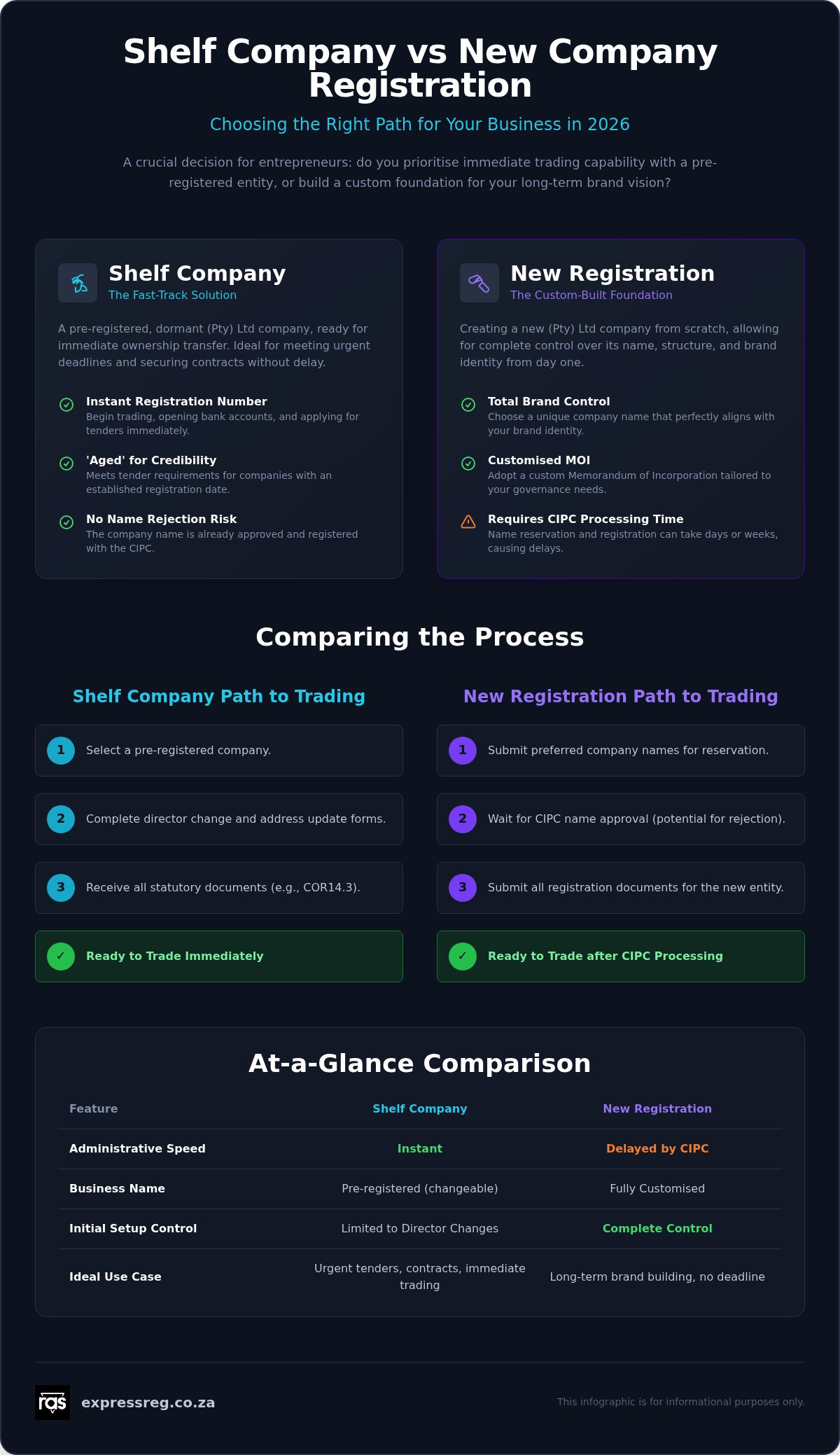
Choosing between a shelf company vs new registration requires a clear understanding of your immediate priorities versus your long-term budget. If you require a registration number within hours to formalise an agreement, a shelf company is the superior choice. This speed carries a convenience premium; you are essentially paying for the time the entity has already spent in the CIPC system. Conversely, a new registration is generally more cost-effective but requires a waiting period of several days whilst the CIPC processes your unique name and incorporation documents.
Naming also differentiates these two paths. A new registration is bespoke from the start, whereas a shelf company comes with a pre-selected name. If that name doesn’t align with your brand, you will eventually need to file a name change. This adds another layer of administration and potentially delays your marketing efforts. Both options, however, provide a solid foundation for VAT registration and obtaining a Letter of Good Standing once the initial setup is complete.
The 2026 Compliance Checklist
Staying in good standing requires proactive management from the moment you take control of an entity. For 2026, both paths require a mandatory Beneficial Ownership filing with the CIPC to identify the natural persons who own or control the business. You must also appoint a SARS Public Officer immediately to act as the official point of contact for tax matters. CIPC compliance is non-negotiable regardless of the chosen path. This means you must keep up with CIPC annual returns and ensure all director changes are recorded accurately to avoid the risk of de-registration.
When to Choose Which Option?
Your decision should align with your specific business timeline. Choose a shelf company if you have a tender closing in the next 48 hours and cannot risk a name rejection. This ensures you have a valid registration number to include on your bid documents today. If you decide to buy a shelf company in South Africa, understanding the 2026 regulatory landscape — including the updated Companies Act amendments and the new R2.3 million VAT threshold — will help you manage your obligations from day one. Choose a new registration if you are building a long-term brand and have a week to spare to ensure your name is perfect from the outset. For a deeper analysis of these trade-offs, read our strategic guide to buying vs registering in the current year.
If you’re ready to move forward with your launch, you can view our registration services to find the best fit for your needs.
How Express Shelf Company Simplifies Your Launch
Express Shelf Company stands as a professional facilitator for entrepreneurs facing the shelf company vs new registration choice. We recognise that administrative complexity shouldn’t hinder your business momentum. Our service is designed to remove the burden of paperwork, allowing you to focus on your operational launch whilst we manage the statutory requirements. Whether you need an immediate registration number or a bespoke entity, we provide the foundational support necessary for a compliant start.
We provide a curated list of ready-made shelf companies for immediate purchase. If you choose this route, our team handles the entire CIPC director change and transfer process on your behalf. This includes updating the registered office and ensuring all beneficial ownership records are filed correctly. For founders who prefer a custom foundation, we offer fixed-fee new registrations. This transparency ensures you understand the total cost of ownership from the outset, with no hidden administrative fees or premium charges.
Our Professional Facilitation Service
We act as your reliable intermediary. Dealing with the CIPC requires precision and a deep understanding of current regulatory standards. We stand between you and the complex machinery of government administration to ensure your filings are processed correctly the first time. Our guidance moves you through administrative hurdles with a focus on speed and accuracy. You receive a structured, step-by-step service that prioritises your peace of mind. By handling the “heavy lifting” of documentation, we ensure your transition to full legal standing is as smooth as possible.
Beyond Registration: Total Compliance
Total compliance extends far beyond the initial incorporation or transfer of an entity. We provide full statutory support, including SARS tax number generation and Department of Labour requirements. Our team assists with VAT, PAYE, and COIDA registrations to ensure you can trade legally and protect your workforce. These registrations are essential for meeting tender requirements and maintaining a professional reputation amongst your clients. We also manage your CIPC annual returns to prevent the risk of company deregistration, keeping your entity in good standing year after year.
Ready to start? View our available shelf companies and registration services to secure your business future today. Our team is ready to assist you in choosing the most efficient path between a shelf company vs new registration based on your specific 2026 goals.
Secure Your Foundation for Immediate Growth
Choosing between a shelf company vs new registration depends entirely on your operational timeline and branding goals. If you face an urgent tender deadline, a shelf company offers the fastest route to a valid registration number. For those prioritising a unique brand identity and a bespoke shareholding structure, a new registration provides the perfect clean slate. Both paths lead to a fully compliant entity; however, you must maintain your statutory obligations with the CIPC and SARS to avoid future penalties.
Our team provides expert CIPC administrative support to handle the heavy lifting of paperwork on your behalf. We pride ourselves on fixed-fee transparency and national compliance services that ensure your business remains in good standing from day one. Whether you require a rapid transfer or a fresh start, we stand as your reliable partner in navigating South African corporate regulations. We manage the complexity so you can focus on building your brand.
Ready to take the next step? Get your business registered or buy a shelf company today and start trading with confidence. Your entrepreneurial journey deserves a professional start, and we’re here to ensure you succeed.
Frequently Asked Questions
How quickly can I start trading with a shelf company?
You can start trading almost immediately because the entity already possesses a valid CIPC registration number. Whilst the official director changes take a few business days to reflect on the CIPC system, you can use the existing incorporation documents to sign contracts or apply for urgent tenders right away. This makes it the fastest route for entrepreneurs facing tight deadlines.
Is a shelf company more expensive than a new registration?
Yes, a shelf company generally carries a higher cost than a brand-new registration due to the convenience of its immediate availability. When evaluating a shelf company vs new registration, the higher fee reflects the administrative work already completed and the value of having an “aged” or ready-made entity that bypasses the standard waiting periods for name approvals.
Can I change the name of a shelf company after I buy it?
You can change the name at any time by filing a formal name amendment with the CIPC. This process requires a new name reservation and an administrative filing to update the company’s Memorandum of Incorporation. Many business owners choose to trade under the existing name initially to meet immediate goals and perform the name change later once their brand identity is finalised.
Does a shelf company come with an existing bank account?
No, shelf companies do not come with pre-existing bank accounts. South African anti-money laundering regulations require the new directors to open a business account in person once the CIPC director changes are processed. Having the registration certificate (COR14.3) ready does, however, simplify the application process with major financial institutions.
What are the risks of buying a shelf company in South Africa?
The main risk involves the potential for undisclosed liabilities or tax debts if the entity was used previously. You can avoid this by purchasing only from a reputable facilitator that guarantees the company has remained dormant and has no prior trading history. Always ensure the entity is in good standing with both the CIPC and SARS before you finalise the transfer of ownership.
Do I need to file annual returns for a shelf company I just bought?
You must file CIPC annual returns every year during the anniversary month of the company’s original incorporation. Even if you have only owned the business for a short period, you are responsible for these filings to ensure the entity remains active. Failing to file these returns can lead to the company being deregistered and losing its legal standing.
Can I register for VAT immediately with a new registration?
You can apply for VAT registration as soon as your new entity is incorporated, provided you meet the specific SARS criteria. You must demonstrate that your business has already exceeded the R50,000 voluntary threshold in sales or provide a signed contract proving you will exceed this amount soon. SARS will require a valid business bank account and proof of address to process the application.
What is beneficial ownership and why does it matter for my new company?
Beneficial ownership refers to the natural persons who ultimately own or exercise effective control over a company. It is a mandatory filing requirement introduced to improve corporate transparency and prevent financial misconduct. You must submit these details to the CIPC shortly after your shelf company vs new registration process is complete to ensure your business remains fully compliant with the latest statutory regulations.